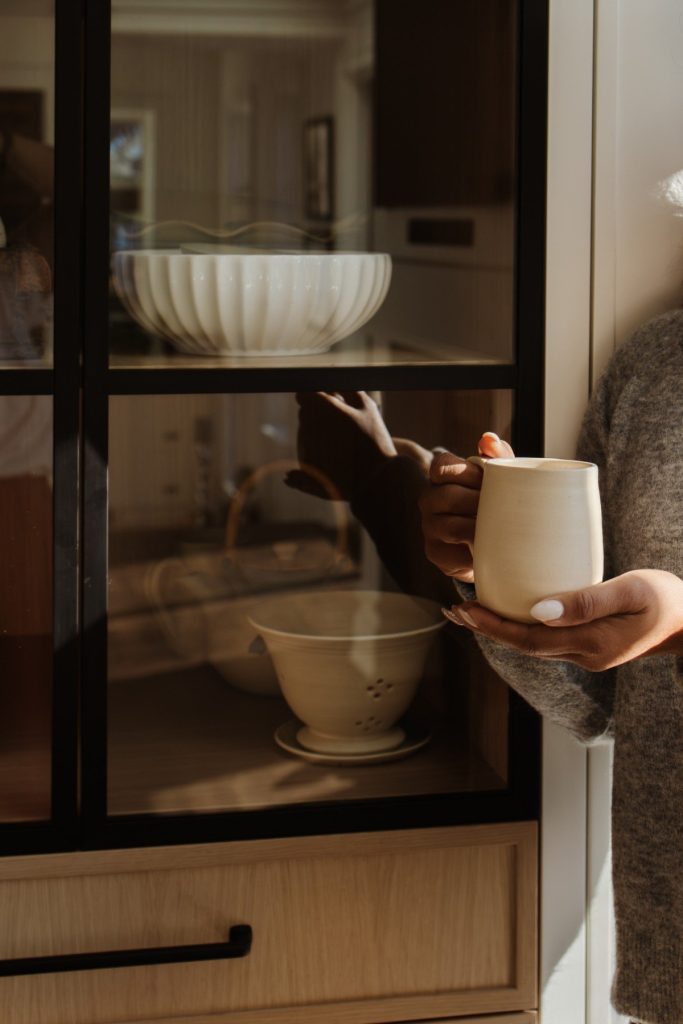
There is a particular kind of loneliness in walking into a room that used to belong to two people. The furniture may be exactly where it has always been, but the space feels different. Or perhaps you have moved, and now you are surrounded by unfamiliar cupboards, half-unpacked boxes, and the realization that no one else is going to decide where the coffee mugs go.
After divorce, home can become one more thing you have to figure out while you are already figuring out so much. You might want a fresh start and still miss your old life. You might feel relieved to have your own space and find the quiet harder than you expected. Those feelings can exist together without making your decision, or your progress, any less real.
Learning how to make your home feel like yours after divorce does not require a renovation, a shopping spree, or pretending the past never happened. It begins with noticing what would make daily life a little more comfortable, then giving yourself permission to make those choices.
Start with the home you actually have
It is easy to picture a new chapter as a beautiful apartment with everything coordinated and a woman who has somehow already found herself. Real beginnings are often less polished. Your space might be a rental, a smaller place than you wanted, a room in someone else’s house, or the family home you are now managing on your own.
Before thinking about how it should look, ask how you need it to work. Where do you struggle to get ready in the morning? What makes evenings feel harder? Is there somewhere you can sit comfortably without staring at an unfinished task? A useful home supports the person living in it now, including her budget, energy, and responsibilities.
Choose one manageable change that would make tomorrow easier. Clear a place for your keys, move a lamp beside the chair you actually use, or put the everyday dishes where you can reach them. These changes may not photograph beautifully, but they count.
Give yourself permission to have preferences again
Sharing a home involves compromise. Over time, it can become difficult to remember which choices were yours, which were someone else’s, and which you made because it was easier to agree. Reclaiming your space offers a practical way to get acquainted with your own preferences.
Notice the small things. Would you rather have music playing while you cook? Do you like the curtains open first thing in the morning? Is there a color you have always loved but never used? You do not need a complete design style to answer one honest question about what you enjoy.
Start with what you already own. Move the picture you love somewhere you will see it, use the mug you used to save for special occasions, or rearrange a shelf around the things that interest you. A preference does not have to be impressive to deserve a place in your life.
Create one corner that feels good to come back to
If the whole house feels overwhelming, reduce the assignment. Choose one chair, one side of the bedroom, or one small section of the kitchen table. Let that be the place you make comfortable first.
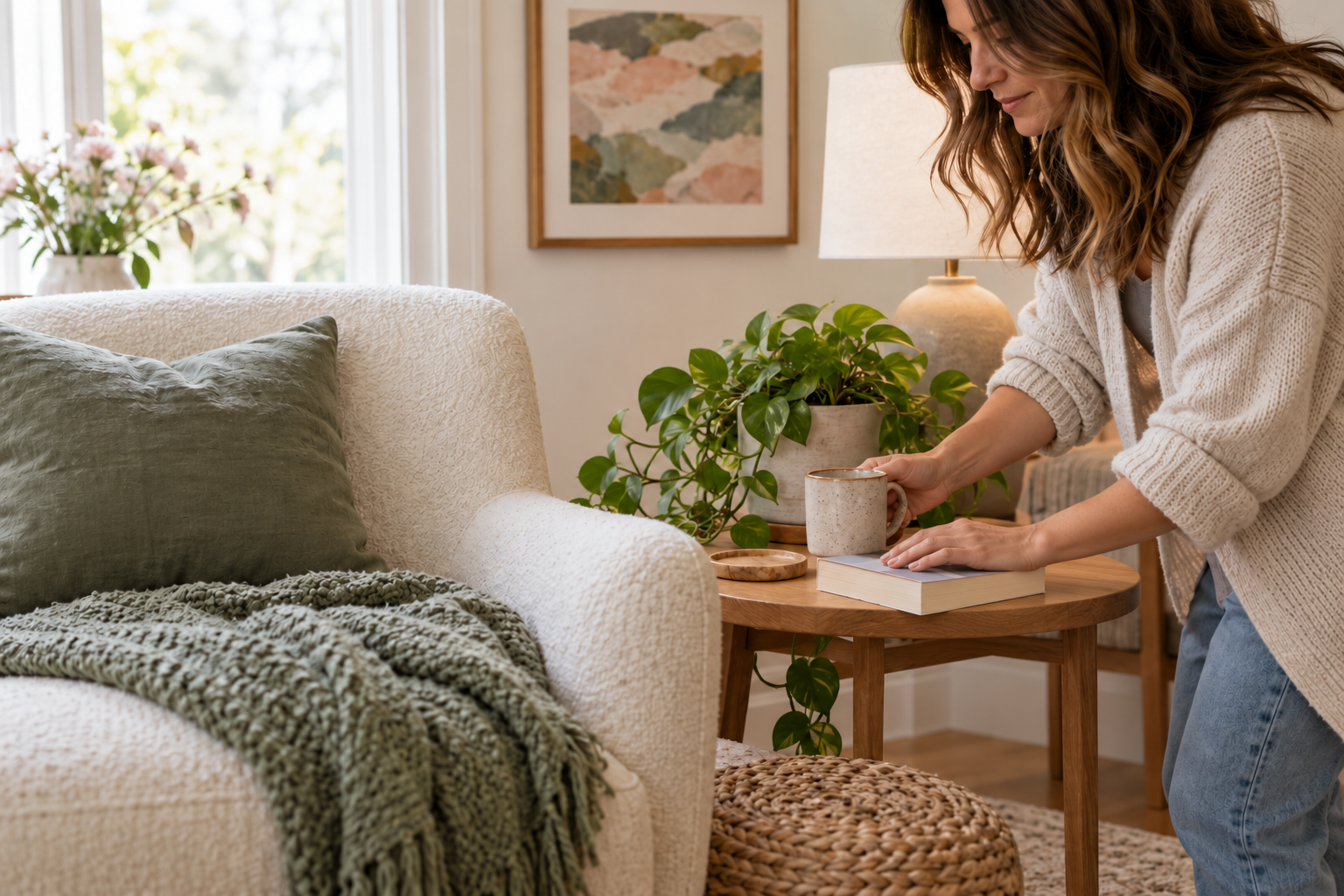
A welcoming corner can be as simple as a cleared surface, a blanket from another room, and enough light to read. Add something personal if you want: a photograph of someone who supports you, a plant, or a piece of art that says something you need to hear. The point is to give yourself somewhere you want to spend ten minutes.
You also do not have to make that corner productive. It can be where you drink your coffee, listen to a song, or sit without answering anyone. Having a place to pause is a reasonable use of space.
Handle reminders at a pace you can live with
Some objects are easy to move. Others carry enough history that even opening a drawer can turn into an unexpectedly emotional afternoon. There is no requirement to sort every photograph, gift, or keepsake before your home can start feeling better.
For belongings that are yours to decide about, it may help to use three temporary categories: keep where I can see it, put away for now, and decide later. A box on a closet shelf can be a perfectly useful answer when you are not ready for a permanent decision. You can also keep something simply because you still like it.
If you have children, consider which shared memories still matter to them and whether a change can be discussed rather than made abruptly. Making room for your own next chapter does not require asking everyone to feel the same way about the past.
Let everyday routines make the space familiar
Decorating can change a room, but living in it is what gradually makes it familiar. Small repeated choices give you experiences in the space that belong to your present life. This can be especially helpful when you have moved somewhere that still feels temporary, even if you expect to stay.
Try a routine that fits the day you actually have: coffee by the window before checking your phone, a simple dinner eaten at the table, or a few pages of a book before bed. Pick something you enjoy enough to repeat without turning it into another standard you have to meet.
Then adjust what is not working. If silence makes cooking feel lonely, put on a familiar podcast. If a large table feels strange when you eat alone, set one place at the end you like best. You are allowed to arrange ordinary moments so they feel more comfortable.

Make room for company, if and when you want it
Having your own space does not mean you have to do all of your rebuilding alone. When you feel ready, inviting someone kind into your home can give the rooms another memory: a conversation at the counter, a shared meal, or laughter over something completely ordinary.
Keep the invitation small enough to feel possible. A friend can come for coffee without the cupboards being organized. Takeout counts as dinner, and a half-finished room is still a place where people can connect. There is no hosting performance you need to complete first.
If visitors are more than you want right now, that is okay too. A phone call while you fold laundry or a voice message exchanged over breakfast can bring connection into your day without requiring you to open the door.
Keep the fresh start within your budget
After a major life change, buying something new can feel like a quick way to mark the beginning. Sometimes a carefully chosen purchase does help. But you do not need to spend money to prove that you are moving forward, especially if your finances are still settling.
Before buying anything, name the problem you want it to solve. Do you need better lighting, somewhere to store paperwork, or simply a room that feels less tied to your old routine? Rearranging, borrowing, or using what you have may solve it. If a purchase makes sense, choose an amount you can afford and start there.
You can build a space you love slowly. In fact, taking your time gives you a chance to learn what you want before filling every gap.
A small home reset for this week
Choose one area you use every day and give it fifteen minutes. You are making a small improvement, not committing to finish the room. If you run out of energy sooner, stop sooner.
- Notice: What feels uncomfortable or inconvenient here?
- Remove: Put away one item that does not need to be in this spot.
- Adjust: Move or add something you already own that makes the area easier to use.
- Personalize: Include one thing you enjoy seeing or using.
- Return: Spend a few ordinary minutes there before deciding what to change next.
Afterward, ask yourself, “What feels a little better now?” That answer can guide your next small change. You do not have to know what the entire next chapter looks like to know that you prefer the lamp on this side of the chair.
You are allowed to feel at home in the life you have now
There may still be days when your home feels too quiet, too unfamiliar, or full of reminders. An uncomfortable evening does not undo the choices you have made. Creating a place you enjoy returning to can take time, just like learning how you want to live in it.
Your next step can be ordinary: fresh sheets, a cleared bedside table, dinner you chose because you like it. Let it be something that makes room for your present needs. You are allowed to care for yourself before every other part of your life is settled.
Choose one small change you can make this week. What would help your home feel a little more like yours?
For more encouragement as you rebuild confidence, rediscover your preferences, and create a life you love, explore Fearless Femme. Awaken. Become. Expand.